Thursday, September 18, 2008

My Top 40 Albums - #1

#1
Switchfoot - "Learning to Breathe"
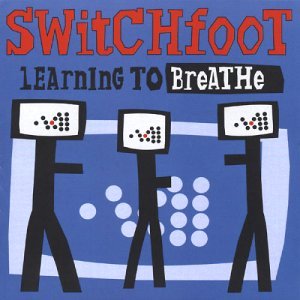
Year: 2000
Label: Re:Think
Favorite songs:
I Dare You To Move, Learning to Breathe, Playing for Keeps, Love is the Movement, Poparazzi

Lyric sample: "Only the losers win / They've got nothing to prove / They'll leave the world with nothing to lose / You can laugh at the weirdos now / Wait 'til wrongs are right / They'll be the ones with nothing to hide / Cause I've been thinking, thinking / I've got a plan to lose it all"


It's always difficult to write about what you consider to be great, because you want what you write about it to also be great. You want it to capture the essence of what makes it meaningful to you and inspire others to see your point of view. The fear of not doing justice can be paralyzing, and can make you second-guess yourself to the point where you either can't write well or don't write at all. Saving the best for last sometimes means that there's not as much energy and zest left for it. I hope that will not be the case here. I want to complete this list and move on to other things, and since I've already written a review of this record, I'm tempted to simply post that and let things be. However, I feel I owe you, my readers, more than that - I owe it myself and to my love for this record. So I'm going to try not to second-guess, and let my ideas and feelings regarding Switchfoot's third album flow as readily as I am able.

If you're a younger person or relatively new to Christian music, you might not be familiar with the first half of Switchfoot's career - although with the convenient early years pack that was released, you don't have much excuse. It was after the release of Learning to Breathe that the band's music appeared on the soundtrack for A Walk to Remember, and the rise to stardom began. That's also when they started adding more band members and gained the financial ability to overproduce their records. Learning to Breathe is the height of the the indie era, the three-piece phase, whatever you want to call it. Other than the first album, this one sounds probably the most organic. It's a smart rock record with a lot of restraint. You won't hear the distortion being pushed to the max here for cheap power - only on "You Already Take Me There" do we feel the fuzz. Most of the sounds that Jon Foreman lays down are bright acoustics and jangly electrics with light overdrive designed to intermingle with the bass. The interplay between all three band members has never been better, and no song would sound remotely like itself missing one of them. Sometimes it's hard to tell which instrument - bass or guitar - has the melody, so inextricable are the parts. The intros to "Love is the Movement" and "Learning to Breathe" typify the kind subtle writing and sound mixing at work. That delicate balance is one of the things I loved so much about old-school Switchfoot, and it helps set this album apart.

For those who have been oversaturated with "Dare You To Move" on the pop stations in recent years, it might be hard to imagine how fresh the song was on its first release (incidentally, it was originally called "I Dare You To Move"). When I put in the CD, I was expecting some kind of funky riff like on "Bomb" or a bouncy rocker like "New Way to Be Human." What I heard  instead was a methodical, swelling buildup to what is essentially an alternative power ballad that leads into the acoustic title track. It sets the tone for the album as being one of introspection, not showmanship.

"I Dare You To Move" begins unceremoniously enough, but with an air of expectation as Jon sings "Welcome to the planet." The clean guitar rings out in constant rhythm, becoming an undercurrent that runs through the song. The band takes time to let it play, to linger on the harmonics and the little keyboard chimes before the second verse. The chorus is pretty and straightforward, Jon's distinctive vocals easily floating into the high notes. When the second verse begins, everything changes. "Welcome to the fallout," he sings with a bit of edge on the end of the last syllable. The rhythm section kicks in along with the distorted guitar for a burst of sound followed by the relative quiet of that clean undercurrent, still steady beneath it all. Long before we hear the lyrics "The tension is here," we know the tension because it's being displayed for us in the dynamic wrestling, as if the song can't decide how it wants to sound. The second chorus is of course louder and more emphatic than the first, and the bridge goes from conflict, to question, to surrender all in a few brief bars, culminating in the falsetto line "Salvation is here." The instruments come crashing back for that final chorus, that crystal clear impassioned plea, which then dissolves into noise before settling into the more calming beginnings of "Learning to Breathe." Its brilliance is in the effective use of simple elements. Many of the other songs on the album are more complex, but few are as powerful.

Another standout is "Love is the Movement," the battle cry of the album. This song has it all - an anthemic chorus, a great classic Foreman metaphor (and a double meaning for the word "movement"), a wailing soulful ensemble, and an epic exultation (going up the octave on "This is a revolution"). The brittle sounds of the verses accent the lyrics about waiting for motion. I can't really begin to explain this song, which is part of what makes it so memorable. All of the things I say about make it sound cliche, when it's anything but. It's one of the best in Switchfoot's catalogue.

"Poparazzi" gets down and grungy with an unkept garage rock sound in a boisterous track about the meaningless pop songs that get stuck in our heads. This is the father of songs like "Gone" that have so much fun with the subject matter. "Innocence Again" flirts with reggae influences. "Playing for Keeps" poignantly captures the funk and confusion that comes with having to let go of a relationship. I've always loved this song because it has a lot of energy, but it's still profoundly forlorn. This song sounds like resignation feels. It's creepy good. Then there's "The Loser." It's an anthem for all losers, and of course it takes on the Scriptural paradox that we lose our lives in order to save them. Switchfoot has long been interested in such paradoxes. "Living is Simple" audaciously asserts that living is simple because losing is easy - it's just dying. Anyone can do it. "Is this fiction / Or divine comedy / When the last of the last finish first." "Erosion" continues the pondering with yet another destructive metaphor. Erosion be seen as something that eats away at you, but Foreman prefers to equate it with the cleansing  force of the Spirit, washing away our impurities.

I feel like in many ways Learning to Breathe is Switchfoot's most mature work. It has at least as much lyrical efficacy as anything they've ever done, with more obviously applicable spiritual themes than some of the latter records. It has the transparency of Legend of Chin, the experimental energy of New Way To Be Human, and the cohesion and atmosphere of The Beautiful Letdown (maybe the most similar record to this) but without all the bombast and fluffy production. It's a track list filled with great songs, played with conviction and honesty, stripped down to their vital elements with nothing added and nothing missing. This was the album that convinced me Switchfoot was going places. I liked New Way to Be Human, but when I heard Learning to Breathe I was transfixed. And I still get that way after 8 years, which is why this has remained my favorite record.

Take an introductory breathing course with this video for You Already Take Me There.

Saturday, September 13, 2008

My Top 40 Albums - #2

#2
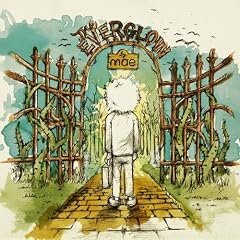
Mae - "The Everglow"

Year: 2005
Label: Tooth & Nail
Favorite songs:
The Everglow, Cover Me, Suspension, We're So Far Away/Someone Else's Arms, Painless, The Sun and the Moon...

Lyric sample: "Painted skies / I've seen so many that cannot compare (to) / Your ocean eyes / The pictures you took that cover your room / And it was just like the sun but more like the moon / A light that can reach it all / So now I'm branded for taking the fall"


The Everglow isn't something you listen to - it's something you experience.

Mae's astounding sophomore record is a delight, a sweeping pop rock epic packed with energy and pathos. The breakout indie rock outfit from Norfolk, VA, have cleverly infused the sounds on the compact disc with the liner notes to take the listener on a storybook journey. As you read the lyrics and listen to the music, you can follow along in the water colored mini-book whose simple but vibrant images place the various tracks in the context of a whimsical fantasy, a concept which reinforces the already superb song sequence. The order is perfect, and thanks to the sounds that neatly connect the songs to one another (as well as signal the listener to turn the page in the insert), this is the most cohesive concept album I've heard in years.

With Destination:Beautiful, Mae showed they were competent musicians who could write catchy indie/emo tunes. The Everglow ratchets up the sonic qualities and blows the first album completely out of the water. It's louder and bolder but also more tender. Mae's distorted guitars have a soft edge, and the ever-present keys are effective at sustaining the mood - accenting the rock sounds and soaking the ballads. Dave Elkins' soothing vocals easily ride the waves created by the rest of the band, and he is a comforting guide.

After the brief introduction, The Everglow opens with "We're So Far Away," a gorgeous piano piece that begins the journey with reflection and longing. It segues with great satisfaction into "Someone Else's Arms," the loudest and most straightforward rock tune that Mae fans have heard up to this point. The juxtaposition of those two songs is a most welcome surprise that fills us with exciting expectations that our journey will be dynamic and unpredictable. Most of the record is not so notable as this initial pairing, but it is filled with little sublime moments. The peppy "Suspension" and transitional "This Is the Countdown" are more subtle, feeding thought-provoking lyrical snippets at measured intervals between singable choruses and driving bridges.

The lyrics on this album are not, for the most part, terribly original or evocative. It's kind of a shame because with some sharper writing the effect might have been a truly transcendent. Also, while I hate to ever complain about being given more for my money, The Everglow could probably function as well with fewer tracks. "Breakdown," and especially "Mistakes We Knew We Were Making" feel a little like filler material. However, a great director, cinematographer and actors can sometimes create a masterpiece even with a flawed script; and with The Everglow it's all about the presentation. We've heard these emotions and ideas before, but never in this way. The unparalleled craft elevates and insulates the weaknesses so that you don't even notice them except upon some reflection. This is a record full of great moments that also amounts to a whole greater than the parts, which is a pretty impressive achievement.

Consider the underrated "Cover Me." The bridge in this song is wonderful. After a typical soaring exclamation ("Figure this out and to be free tonight") the song collapses down to a single palm-muted guitar riff backed by a tentative piano. The note choices are exquisite. Every one has value, none are wasted. I sucks you in, breathless, listening for what they will do next. As the instruments join and the intensity builds back up again, the same riff is given layers with more complimentary notes in what becomes one of the best songs on the record. You have to hear it to appreciate it.  This is followed by the title track, the triumphant climax of our spiritual journey. The keys sparkle over the song like a clear canopy of twinkling stars and you can feel the rapturous satisfaction of decision and victory and rest. Tracks 12-14 are more of the declining action, culminating in "The Sun and The Moon," a devastating swell of sadness and beauty.
The repeating progression in the extended outro is genius - so simple yet so entrancing. Taking advantage of the circle of relationships between chords in a key, it leads us around and around in inescapable, dreamlike maelstrom. It seems appropriate that song evokes sea-like imagery. You could say that "The Sun and the Moon" is a sister song to "The Ocean," the other true ballad that sits in the middle of the record. It's a fitting denouement to a bittersweet experience.

If you haven't heard this album, there's no time like the present. If you have, it's easy to tell, because you're shaking your head wondering why this isn't number 1. ;)  Relive the magic with this video of Suspension.

Saturday, September 6, 2008

My Top 40 Albums - #3

#3
Five Iron Frenzy - "Five Iron Frenzy 2: Electric Boogaloo"

Year: 2001
Label: Five Minute Walk
Favorite songs:
Far Far Away, You Can't Handle This,
Farsighted, Car, Blue Mix, Plan B
Lyric sample: "And Leonard Nemoy / Can't stand up to this / And Captain James T. Kirk / Bows beneath my fists / And I am awesome / Awesome / I am the awesomest"

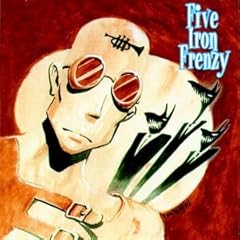
If you look closely, the clues are there. Eight people: not too many bands have eight people. And what's with that title? Electric Boogaloo? Sounds downright silly, and it actually has nothing whatsoever to do with record's theme or content. It's a reference to the movie Breakin' 2: Electric Boogaloo. Oh, and this isn't the band's second album. It's their 6th. So the evidence is here. But there's not much else that alerts us that this is a Five Iron Frenzy record. Where are the flashy colors? The stylized drawings of robots and creatures? As it turns out, Electric Boogaloo is not your older brother's Five Iron. It takes quite a different approach from the experiment that was All The Hype Money Can Buy. With this new album, Reese Roper and the gang have reinvented themselves, riding their third-wave ska onto the beach of modern rock. And the surprising thing? They're all the better for it. Long-time fans may have difficulty accepting the lack of upbeats and quirky horns; but if they can get past their initial expectations, they may find that Five Iron Frenzy has released the finest recording of their career.

This is a darker, more serious FIF, but that in no way makes it boring or uninteresting. Quite the opposite - the songs on Boogaloo are fast-paced and riveting. The guitars rock harder, the drums pound louder, and perhaps most noticeable of all, Reese sings better than ever before or since. Lead vocalist Roper has never sounded better than he does here - we catch him at what is arguably the apex of his career. It's almost hard to believe this is the same mumbling, thin-sounding man from 1996. Here he exhibits a great power and confidence - his highs are startling but they don't waver. His unique presence is
compulsively listenable. It fills out the record and drives it forward. Listen to those high notes on "Farsighted," and the shouts and screams on "The Day We Killed" and "Vultures." His lyrics are still solid as well, they just aren't as funny. That is not to say the record is without its humor, of course. "Pre-Ex-Girlfriend," "You Can't Handle This," and "Plan B" and "Vultures" all have their share of silliness. However, standouts like "Spartan" and "Far Far Away" carry a solemn respect for their subject matters. The only place that their earnestness goes a little bit overboard is on "The Day We Killed" - it's just too theatrical. However, when a song like that is the worst one on your album, it says a lot for the other tracks. And here they are all fantastic. Writing and technical credits are strong across the board. This is the most polished FIF record. Finally the level of production is matching the strength of their songwriting which is as catchy as ever.

Once again I will alternately caution and encourage readers: this is not a ska record. Even less so than The End is Near. It is modern rock with horns. The only song that really contains any discernable ska element is "Plan B," which, like the rest of the record, sounds stronger and more refined than similar tracks on previous outings. By industry standards, Boogaloo's quality stands out from the crowd of mediocre rock albums. Take a close listen to the underrated "Car." How many contemporary Christian music acts have you ever heard perform a song in 5/4 time? I can count them on one hand. Once you realize what they are doing, you gain a whole new respect for the song. Just try and figure out where all the hits are going to land and I imagine you'll be left scratching your head at least once. But here's the kicker - it's not just an experiment, it's a genuinely good song with a singable chorus and some emotional lyrics from Jeff "The Girl" Ortega.

With so many memorable songs that run the gamut of FIF's usual subjects - the infectious, satirical "Vultures" takes on consumerism and corporate greed; "The Day We Killed" angrily laments the mistreatment of native Americans; "Blue Mix" exposes the industry with ferocious style - I have to say a word about "Far Far Away." It is one of the first Five Iron songs I remember hearing, and after listening to their entire catalogue it remains one of their very best. The loaded verses swell into an irresistible chorus in a song that should have soared on radio waves for months. "Far Far Away" has the poignancy of old favorites like "Every New Day" in a brisk, savvy, 3 1/2 minute rock song. It sits near the helm of the record but it could easily be a closer to cap off the journey (though "Eulogy" fills that need in bittersweet beauty).

Five Iron Frenzy may not be known for their maturity, but Boogaloo is a class act - a cohesive, top notch album with a big sound a great songs from beginning to end. As my favorite CD from one of my all-time favorite bands, Electric Boogaloo is a shoe-in for spot number 3.

None of these songs have official videos that I am aware of, so just listen to Far, Far Away. It's the awesomest.

Thursday, August 28, 2008

My Top 40 Albums - #4

#4
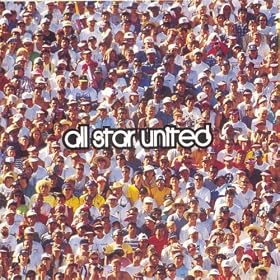
All Star United - "All Star United"

Year: 1997
Label: Reunion
Favorite songs:
La La Land, Lullaby, Smash Hit, Torn, Dive, Savior of My Universe
Lyric sample: "I got my prayer cloth collection in a Jesus jar / I got the Holy Ghost ridin' in the back of my car / Sometimes He gives a little tickle, I go "hardee har har" / Ain't it grand when you're living in la la land // My Jesus decal does quite a trick / Right above my dashboard I stick it / A good luck charm / It keeps me from harm / And saves me from speeding tickets"

One of my great regrets in life - somewhere in between killing that innocent little bird with a BB gun and wasting 75 cents + 2 1/2 hours of my life watching "The New World" - is that I never got to see All Star United live in concert during their glory days. From what I've heard it was a sight to behold, a crazy show with a lot of energy. It wouldn't be out of character. This debut record is still the band's greatest achievement, a lean 10 songs with nothing poor and nothing wasted. It's a tightly packed and well-groomed album containing the essence of everything that endears All Star to their fans. When they released their premature greatest hits collection after only two records, the lion's share of the material came from their self-titled debut. Of course, predictably, most of my favorite songs weren't their favorites, but I suppose it doesn't matter. That's why I am happy to own the CD so I can listen to their favorites and mine.

All Star United isn't an ambitious recording. It doesn't have any lofty expectations. It's just one band doing what they do best. It's their uniqueness and purity that makes it all so worthwhile. I've said it before - no one does "happy" as well as All Star United. Happy is hard to pull off without coming across trite and cheesy. People don't take you seriously when you're too happy. It seems fake. Fortunately, All Star United is quite genuine; at least as far as they intend to be. Lead singer and lyricist Ian Eskelin is one of the best satirists in the music business and he comes out of the gate with his tongue in his cheek. "La La Land" lights up with bright distorted guitars and quirky, almost circus-like keyboards bouncing along in the back while the lyrics speak of such things as "marshmallow skies and custardy pies." This sugary language describes in some ways All Star's approach to sarcasm. They are not really confrontational, but if you listen they are calling out the failings of modern Christianity - in this case a feel-good, prosperity Gospel that uses Jesus as a get-out-of-jail-free card. The song is pretty funny, and it has a good rock quotient and smart chord progression as well.

This trend continues with "Smash Hit," sending up the business of all things contemporary Christian. The truth sometimes gets lost in our attempts to market it, but at the end of the day Jesus doesn't need our promotions or ad campaigns. He's the biggest hit of all, a sensation in His own right, affecting the whole world. That's what you get if you think about the song. If you just feel it, you might merely headband to the infectious bridge riff - but that's okay too. "Bright Red Carpet" takes a clandestine approach to a serious subject: fame and wealth on earth don't give you any special credentials in the afterlife. When the band says "Will you be there when they roll out / Bright red carpet / Will I see you by my side," what they mean is, will you be in heaven? Or is your worth found in clothes, popularity, and money?

I guess happy is less the word for All Star than upbeat. This they are consistently, but I don't want to sell them short. I've already established that their lyrical content takes them much deeper than simple fluffiness, and they also have plenty of sincere sentiments. "Savior of My Universe" is a well-realized worshipful acoustic track. "Torn" expresses the uncertainty that we have all felt when wondering how (or perhaps even if) to proceed in a relationship. "Drive" offers a listening ear to a friend in distress. While pain is touched upon, it is never wallowed in. The band has hope and they are eager to share it. There are plenty of bands that do dark and do it well, but so few have mastered the lava-lamp exuberance that All Star exudes so effortlessly.

This breakout disc is also the strongest musical outing for All Star United. They are good musicians, and they give their guitars and keys time to play the songs to their conclusions. "Drive" and "Torn" are particularly great in this respect, but even "Lullaby" breaks out in the middle for a little jam. The trebly guitar tones, retro keys and background "woo-hoos" give the record a familiar congenial sensibility that recalls a simpler time. It's one of those discs that is just good clean fun. Listening to it lifts my spirits and reminds me what I love about music. Ladies and gentlemen, the greatest band in the world.

I looked far and wide (but mostly wide) and discovered this video for Bright Red Carpet, apparently made when the band had so little cash that they couldn't even afford to decorate the walls. Pretty straightforward, and hey, you don't even have to navigate away from this page so you might as well play the video.


All Star United - Bright Red Carpet
urbnmix music video codes

Tuesday, August 26, 2008

My Top 40 Albums - #5

#5
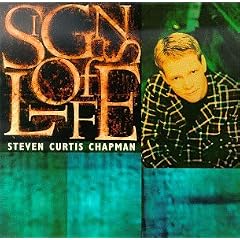
Steven Curtis Chapman - "Signs of Life"

Year: 1996
Label: Sparrow
Favorite songs:
Lord of the Dance, Rubber Meets the Road, Children of the Burning Heart, Only Natural, Signs of Life
Lyric sample: "Come in base I've landed my ship on a planet here in space / This is the one they say is inhabited by the human race / And I'm going out to look around and see what's here / And I'll tell you what I find / Confirmation on the inhabitants, they're running everywhere / Their technology is beyond what I've seen anywhere / But I'm trying to communicate and they don't hear me / Seems like for all I'm finding I can't find the most important thing"

As a person who enjoys lists, I've made quite a few of them in my life. Favorite fast food restaurants, best rollercoasters at King's Island, top 100 albums, etc. I gleefully engage in conversation about how one thing stacks up against other, similar things. Maybe it's a little bit of OCD in wanting to see neat, organized lists. Maybe it's the control freak in me trying to control my world by reducing complex questions to simple matters of better and best. Or maybe it's just an attempt to know myself and what I like. I have a favorite food, a favorite color, a favorite animal, a favorite day of the week; but the one list I could never make was that of my favorite songs. I've always found it too daunting a task. Aside from the fact that I will be singing something different every day of the week, there are just so many songs! Millions have been written and I've probably heard tens of thousands of them in my lifetime. Usually, I pass on the question.

However... if a maniac burst into my house and held one of my family members or my cat at gunpoint and asked me to choose a favorite song (I've heard this kind of thing happens every so often), I have little doubt that my answer would be "Lord of the Dance." The lead track from Signs of Life, Steven Curtis Chapman's spectacular follow-up to the hugely popular Heaven in the Real World, "Lord of the Dance" is a consummate recording. I compliment the
recording and not just the song  because I can hardly imagine it being any more finely tuned than it is. When Steven rerecorded "Lord of the Dance" (as well as "The Walk") live in Abbey Road studio for his Greatest Hits record, it was a fun little experiment. But it wasn't the masterpiece found on Signs of Life. This album is somewhat of a departure from the reverb-soaked pop rock of the last album. It adopts more of a down-to-earth folk rock approach. Steven and the band blend crisp, percussive acoustic guitars with wailing electric leads, distinctive Dobros, fiddles, pianos and more into a mix that is musically literate but not lacking in Chapman's radio-friendly charm. Signs of Life won a Grammy for best gospel album, and at least four of its songs were nominated for song of the year at the Dove Awards; and it's no accident. From beginning to end, excellence pervades. If you want to hear great musicians jamming out on high quality Christian pop rock songs, this is your album. And "Lord of the Dance" represents the best it has to offer.

What a song it is. It pains my trying to come up with ways to adequately describe it. The first tones grab your attention, mysterious, suspenseful. The guitars, tuned to open D, slide and bend with mournful anticipation. Underneath, percussion: light, but with purpose. A whine and a slide, and then on either side, far left and right, the acoustic undercurrent begins with a snappy but somewhat dark run down the strings, ending in the low D string ringing warmly in its sound space. The riff goes back and forth, a dancer in its own right, just shuffling, biding its time until it's time for the real choreography. The vocals come in, but no lyrics yet. Just "da dums." The tone is measured, ambiguous. It's clear that something is happening, but we don't yet know how to feel about it. All we know is we want to hear more. The instruments mellow and find their place, keeping the pulsing rhythm as the verse starts, and when Steven sings about his birth on the Tennessee river, we are already there. The feeling of those foggy shores on a humid southern morning with a slightly chilly breeze; the dark green of the foliage on the bank still casting shadows in the newly-risen sun; you can just about feel the flies buzzing around the back of your neck. It's an almost Deliverance-like moment. There are no dueling banjos, but these are modern times. Our musical tour guides are playing Taylors now.

Halfway through the story, the first cymbal sounds, and we begin our journey upriver. The rapids are approaching, and the pensive folk instruments are leading us to a crash-course with rock n roll when we go over the waterfall and into the chorus. At this point, it's useless to identify the parts of the song . They have solidified into a whole so unified, that there is no one playing the song; there simply is the song.

Basically, "Lord of the Dance" is as perfect a song as I have ever heard and I love everything about it, even though I don't care for Riverdance or even dancing in general. I've listened to it probably 6 times while writing the last two paragraphs and I'm not sick of it yet. When Speechless came out I listened to "Dive" until I drove it into the ground. I'm not sure I can do that with "Lord of the Dance." But I should talk about the rest of the record. "Signs of Life" is a nice mellow song and has some cool bass in it. "Children of the Burning Heart" has an inspiring melody and it invokes imagery of mountains and fields and wind in your face - of freedom and determination. It also has some great fiddling. "Rubber Meets the Road" has a solo that is straight up crunk as anything in the dirty south. "Only Natural" is a great jam song. "Let Us Pray" and "The Walk" are the really popular, Dove-nominated songs, which means they are good, but as usual, not really the album highlights. Both are excellent in their use of Scripture, however. "Free" concludes the first half of the album with a tender emotional ballad.

This is one of those albums that I could listen to just about anytime, anywhere. It's Steven Curtis Chapman's finest hour and with a career as distinguished as his, that's saying a lot. It has great energy, style, and is a spectacular batch of songs. Get with the groove and join the dance with the Lord of the Dance music video. Unfortunately, this video cuts off the song before its logical conclusion. The 5 minute 20 second running time of the full track is too much of a strain for radio or music television, so what we got with this abridged, less than 4 minute version that is, of course, inferior to the full version (and is kind of a weird video to boot). Still definitely worth a watch.

Saturday, August 9, 2008

My Top 40 Albums - #6

#6
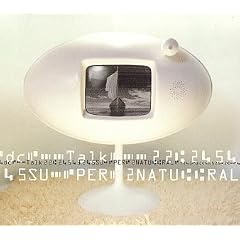
dc Talk - "Supernatural"

Year: 1998
Label: Forefront
Favorite songs:
Since I Met You, It's Killing Me, Supernatural, Wanna Be Loved, Dive
Lyric sample: "I've never heard a dying soul / Wish that he had taken / More time on his portfolio / I swear, I never heard a momma say / Shoulda never had that baby / As a doctor holds her newborn on display / It's a heavenly prescription / A little bit will go a long, long way / Just put yourself in their position / Don't we all wanna be loved"

I've said it before - great bands either embody the best a particular genre has to offer, or fuse genres creating something that either defies labeling, or forces new labels to be created. dc Talk is the latter type: a group so varied that trying to pin down all their influences is about enough to make your head explode. Of course it's made a bit easier by looking at the threesome as individuals, but when they were together Toby, Michael and Kevin were a musical force. I realize I'm committing heresy in the eyes of many by having this record in my top 10, 6 spots higher than the beloved Jesus Freak. That album sits on a fantastic golden pedestal replete with gems, jewels and other shiny things. It's considered untouchable by many hardcore fans. So I'm going to risk mass hysteria by awarding the prom queen tiara to the ugly-duckling younger sister, believing that some of you will be able to see the beauty here the way I do.

Supernatural is the next natural step in the progression dc Talk has been making since Nu Thang. With each record, the rap quotient has diminished a bit, the rock amped up, and the production values improved. In Jesus Freak, the trio took their funk-tinged rap project and transformed it into a full-fledged modern rock/grunge masterpiece. With Supernatural, the raw energy and melodic sensibility of Jesus Freak takes on a dense atmosphere, drops the rap altogether, and takes us on a journey into new alternative territory. Frankly, I don't think the detractors who cite overproduction as a flaw have a leg to stand on. The only thing that keeps most artists from sounding as good as they could is money. dc Talk now has the wealth and popularity to do it up right, and they have taken great care in composing what I consider to be their finest record; it's certainly their most intricate. I understand if having too much going on waters down the overall feel so that doesn't hit as hard - that would in fact be detrimental to a rock group. However I don't think that's the case here. "It's Killing Me" and "Supernatural" sound every bit as brutal as anything on Jesus Freak, and the ballads like "Consume Me" and "Red Letters" only benefit from the smoother mix. Supernatural also serves to emphasize the boys' vocal harmonies, which Michael and Kevin serve up in plentiful style.

The songwriting on Supernatural is more balanced than on its predecessor, believe it or not. Toby Mac wrote most of the songs on Jesus Freak with the help of studio personalities like Mark Heimermann. That album also featured two covers ("Day By Day" and "In the Light") in its brief 10 song roster. Supernatural has a much better mix in the writing department. It has 12 original songs (plus Kevin's poem "There Is A Treason At Sea") and no covers, with all three Talkers weighing in on nearly every song. The result is not eclectic - rather, it is a very cohesive modern alt rock outing. Instead of having many songs of varying styles, the styles are melted down and mixed evenly inside the tracks and then those tracks are flown together in a very natural progression. It's eminently listenable. And with all the odd, edgy, creative material ("My Friend (So Long)," "Fearless," "Dive"), there are moments of high energy and pleasing harmonies ("Wanna Be Loved," "Since I Met You") and the best ballads in dc Talk's catalog ("Consume Me," "Red Letters,"). Also I suppose an X-Files fan such as myself should probably mention the song "The Truth" which borrows a catchphrase from what was at the time a wildly popular television show and proclaims "The truth is out there." The haunting "There Is A Treason At Sea," following the example of "Alas My Love" but in many ways exceeding it, closes out the album on a tasteful low note. The words of Kevin's poem evoke the imagery of the album art (the ship and the dark ocean) and then slip blissfully into the same swelling ambiance from the Intro.

It's a daunting task to call your album Supernatural and then try to live up to the name, but dc Talk is up to the challenge. If on this list there exists a perfect record, this is most likely it. It's as close as I think I've ever heard. "I see the truth, and I believe."

Consume Me. I like this video more than the My Friend video, even though they cut the song down, which is annoying.

Thursday, July 31, 2008

My Top 40 Albums - #7

#7
Luna Halo - "Shimmer"

Year: 2000
Label: Sparrow
Favorite songs:
Superman, Forgiveness, So Far, Wait For You, Running Away, The Way To Your Heart
Lyric sample: "My skin feels strange / Like there's something underneath / Locked in these chains / How I ache to be free / Dancing shadows / Call me closer but still I'm waiting // Until the sun stands still again / Until the earth reverses / Until my eyes can see the wind / I'll wait for You"

One of the truly exquisite recordings on this list, Luna Halo's impressive debut album Shimmer is practically bursting with dynamic, creative expression. It moves deliberately, never rushing, always giving its passages room to breath and progress at a natural pace. The songs tend towards the long side, but not unnaturally so. The band simply allows its ideas and motifs to play out properly. In so doing, they make sure that even the quiet sections have enough interest and are leading to or from something. Shimmer is a densely packed album. Every song is painstakingly assembled with just the right mix. The sound is guitar-laden, but it rarely feels heavy or bracing. In fact, one of the most notable features about Shimmer is its atmosphere. Luna Halo made a space for themselves in the industry with their brand of moody alternative rock owing to British bands like Radiohead and Delirious? for inspiration. They even cover a Delirious? song - "Hang On To You." It set them apart from the skin-and-bones bands of the 90's that were still hanging on to vestiges of the grunge movement. I don't have a lot of patience for meticulous sub-genre labeling, but I have no doubt that Luna Halo is post-something. Their guitar work is covered in effects and serves to blend the elements of the songs together rather than stand out in a flashy sort of way. The guitar solos, if you want to call them that, are frequently noisy and chaotic (see: "Running Away" and "The Way to Your Heart").

Their approach may not be new to British bands (Luna Halo is from the states) but it hadn't been heard much in Christian music, certainly not with this kind of quality. If they wanted to make a splash with their first record, you can tell they decided to do it by going over every track with a fine-toothed comb and making sure it was perfect. There's not a weak song in the bunch. The opener "Aliens" is probably the least interesting, but it gets by on atmosphere and sets the tone for the record. Luna Halo's sound is radically different from the funky rap-rock of Reality Check, from which several of its members have come. Front man Nathan Barlowe's voice has a spectacular range and a floaty quality that is superbly supported and complimented by Shimmer. I can't imagine any other timbre of singer being appropriate. And fortunately, they make use of his talents. The intelligent song structures give rise to a number of superb melodic and harmonious moments. The chorus of "Wait For You," the pre-chorus of "Forgiveness," the bridge of "Way To Your Heart," the ending of "Superman"... all these are gorgeous passages, among the best the record has to offer but by no means the end of its charms. The lyrics are predominantly small and simple but effective.

The new Luna Halo that was released last year is for all purposes a completely new band. It has lost the Christian themes which are prominent throughout this first record, it has abandoned their signature atmosphere in favor of a more straightforward rock, and Nathan's voice has roughened quite a bit in the last 8 years. He's never sounded better than he did on Shimmer. Beyond that, the songs simply don't compete. There isn't nearly the depth and subtlety found here. When I first listened to Shimmer, I recognized that it was good but wasn't immediately sold. It's not impenetrable at all, but it doesn't have the quick riffs or blazing solos that catch people's attention right off. It does, however, have an enduring quality. If you love one song enough to listen to the rest, each one in turn unveils its secrets until you see the beauty of the whole. Or at least, that's the way it worked with me. I'm still finding new things to love about Shimmer. That's why it sits proudly in my top 10.

I have scoured the internet to find this music vid because it is one of my favorites and it's one of the best songs on the record. I finally found it, albeit in a low quality form. It's been difficult to find. Seemingly, the band or someone involved with their label/marketing has been destroying access to the remnants of the old-era Luna Halo. If you want to watch it, you should do so immediately, because it will probably be pulled from YouTube. I didn't tag it with the band's name or the song title in hopes that it won't be easily searchable and that this will delay its removal. Without further ado... Superman
.

Monday, July 28, 2008

My Top 40 Albums - #8

#8
The Juliana Theory - "Love"

Year: 2002
Label: Epic
Favorite songs:
Do You Believe Me?, White Days, Jewel to Sparkle, Repeating Repeating, In Conversation, DTM
Lyric sample: "Conversation is amazing when we're free to be things people often won't because they hate themselves / These situations almost daily have a way of making people understand that all of us are one / But isolation and division will be our destruction if we can't communicate / So as I contradict myself, and forget all I've said, I am free"

The dark horse of Juliana Theory albums, this one probably upset a lot of fans by varying drastically from the emo-pop formula that they had established. I suppose I've never been much of a purist, as I tend to love the records that veer from a group's established norm. With something of a concept album in Love, the emo band goes hard rock, and what a joy it is! Especially since they do it better than most hard rock groups. In my mind there aren't nearly enough rock records like this - lots of guitars big in the mix and singable vocal melodies combine into a tasty concoction. The dingy, thick-sounding electric guitars have a real presence here. They buzz and float and even crash, thanks to some dropped-C tuning on songs like "Congratulations" that make this by far the most aggressive album in The Juliana Theory's canon (which, by the way, is now forever closed thanks to their disbanding after the release of "Deadbeat Sweetheartbeat"). The consistency of the instruments and the value of melody over pure energetic recklessness reminds me quite a bit of some gothic rock groups like HIM. Their signature piano is still present ("Shell of a Man," "The Hardest Things"), and with the big-label mixing power they've established almost a tangible airy-ness, a space in which the music exists. As a guitar player I can more easily focus on the six-strings, but I would be remiss if I did not remark on the work that the rhythm section does. Drums and bass play a huge part in the mood and style of the album, and both have a chance to shine on Love.

Bret Detar's vocal performances have been steadily improving since the unsteady start on the first record. On Love they sound fantastic. He still has the smoothness he possessed on Emotion is Dead but he takes the range and power exhibited there to new levels. They've also found new creative ways to juxtapose his screams against seeming unfitting music - listen to "In Conversation" and you'll understand. The really impressive bit about that song, though, is the way he segues from a note into a scream and back in the same breath. Quite a set of lungs on this man! This shows him building up his endurance to the point where he was able to muster that 30-second gut-buster on the next record's "French Kiss Off."

"In Conversation," aside from being a welcome change of pace, is an example of the record's songwriting strengths. The band shows what is probably the greatest complexity and maturity of their discography. Take, for instance, the brilliant "White Days" with its mesmerizing undercurrent, rhythmic lyrical structure and crisp arpgeggiated intro. You can just feel yourself staring, absorbed, at the oncoming road as you drive through the night. The tasteful "Jewel to Sparkle" cleverly presents a subversive melody. "Trance" and "DTM" pick things up in the second half with some continuous rocking out. Neither is as memorable as something like "If I Told You This Was Killing Me..." but in many ways they are better songs. If you want memorable, look no further than the deliriously hooky "Do You Believe Me?" with its fun "woa-oh-oh" background vocals that hearken back to the 80's (Michael W. Smith's "All You're Missin' Is A Heartache" comes to mind). This song has it all. Punchy guitars, a nice buildup, and a satisfying introduction of additional vocal harmonies in the final chorus.

Probably hoping that with their new label they would be reaching new audiences and making first-time fans, TJT decided to re-record one of the best tracks from Emotion Is Dead and place it on the album. The updated version of "Into the Dark" is still a good song, and the new presentation was necessary to make it feel like it fits on Love. Yet, to me, it doesn't really add anything to the album and I think the first recording is a superior vision. Other tracks that aren't as successful are "The Hardest Things" and the final track, "Everything." "Everything" simply doesn't work on the same level as "You Always Say Goodnight" or even "Constellation." It's not really poor; it just closes the record with a sputter rather than a bang. It's a fitting wrap-up lyrically, but it's not as creative as most of the other tracks. "Trance" is actually a great jam song, but it has potential to be a lot more interesting in the final minute or so and doesn't reach for that.

The Juliana Theory is one of my favorite groups, and in my opinion this is their strongest release.  I keep Love close to my heart (*groan*) and close to the top of my list.

I apologize for the video - they didn't have any professional videos from this album as far as I can tell and the concert footage is of characteristically poor quality.  So this is just the song, but it's a great song and you should listen to it anyway. Do You Believe Me?

Saturday, June 28, 2008

My Top 40 Albums - #9

#9
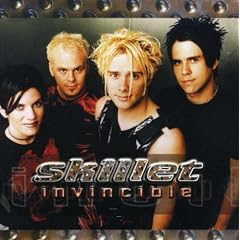
Skillet - "Invincible"

Year: 2000
Label: Ardent/Forefront
Favorite songs:
The Fire Breathes, Best Kept Secret, Invincible, You're Powerful, You're In My Brain, I Trust You
Lyric sample: "You know you just can't kill a man when he's dead / You know the spirit survives / You can't stop the advance of the Kingdom to com / You know the truth is alive (invincible)"

Electro-industrial rock. That's what singer/bassist John Cooper of Skillet called their musical style circa-2000 when Invincible was released. As I've been saying in my previous reviews of Skillet records, the band perfects a style once every other record. Hey You, I Love Your Soul was a transitional effort, veering wildly from the raw grunge rock of their debut into a completely new territory dominated by electronic effects. With Invincible Skillet found their niche, a sublime combination of hard rock and electronica that is about as perfectly balanced as I can imagine it. The unorthodox praise band rocks harder and more confidently than ever before, blending distorted electric guitars and real drums with electronic percussion and all manner of computerized synth sounds, beeps, bloops, and swells. They also incorporate more traditional keyboard tones on some of the softer tracks.

The record opens dramatically with one of the ripest, most satisfying synthetic sounds I've ever heard. Immediately, they have my attention. I figure any song that sounds that sweet in the first 5 seconds is going to be great all the way through, and I'm not let down by "Best Kept Secret," one of Skillet's all time best tracks. It sets the tone for the album and for the rock tracks that are to follow. Seeped in style, a little bad-boy-esque - its grinding, somewhat fuzzy compressed guitar sounds punching in time with the danceable electronic beat that offers a lot of bass response. Cooper's voice also seems to have found its way by this time. In the first record he sounded hoarse all the time, and in the second the mix was simply too quiet. Here he gets a more prominent  presence in the songs and commands a smoother sound than at any other point in his career. This lends itself nicely to the airy spaces often left in the songs between all the keys, yet still retains enough attack to drive the heavier tracks. This is the most refined Skillet prior to Comatose. Yet, unlike the latest release, it has a focused lyrical approach in addition to a coherent and unique style.

You'll probably notice as you listen that most songs are written in second person. "You" is the most common noun of address. Why? Because Invincible is at its core a praise and worship album. Easily half the record is vertical, sung to or at least about God. "You're the best kept secret." "You take my rights away." "You're powerful." "I Trust You." "You're in My Brain." "You're the One that I need, the One who makes me complete," etc. That's six songs directed to the Father in Heaven, not counting the tender and beautiful "Angels Fall Down" which appears as a hidden track. In 2000 this seemed more difficult for people to grasp than it does today. I mean, these guys wore crazy hairstyles and funky clothing and played strange rock music. It just so happens they found their own unique way of expressing their faith and emotions, and I for one am glad they did.

This is another one of those albums that is sometimes hard for me to explain. What is the appeal? Either you like the style or you don't, I think. I love it, and nobody else sounds like this. Even Skillet doesn't sound like this, except on this record. "The Fire Breathes" gets me so pumped up. "Rest" is calm and chill. The only one that I think doesn't work as well as it should is "Each Other," a bit of a stock ballad. After Audio Adrenaline's Some Kind of Zombie, Skillet (and namely Invincible) was one of the first heavy bands that I started listening to. This record to me was a gateway to a world of great alternative music, and it stands as a benchmark today. "It lives inside of me / burning, burning, burning."

One of my favorite music videos is the one for Best Kept Secret. I love how it looks like they are wearing wrapping paper! And near the bridge ("let it out..."), the imagery seems influenced by the X-Files movie. ;)

Thursday, June 19, 2008

My Top 40 Albums - #10

#10
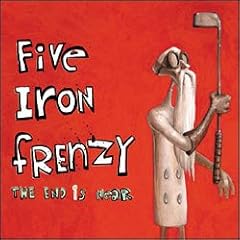
Five Iron Frenzy - "The End Is Near/Here"

Year: 2003
Label: Five Minute Walk
Favorite songs:
Wizard Needs Food, Badly; On Distant Shores; Cannonball; See The Flames Begin to Crawl; At Least I'm Not Like All Those Other Old Guys
Lyric sample: "The crowds recoil, demand our survival / Fists in the air, mouths caked with saliva / But you are the ones, the spark that was spawned / Who picks up the pieces and passes it on"

I'll go ahead and say it right out - this is an emotional record for me. I purchased it at Liberty University following a Five Iron concert that I had just attended as part of the Winners Never Quit Tour, also featuring Bleach and Holland. This final tour for the world's most famous underground ska band, and so while it was exciting to be there and hear them before they disbanded, it also provided a certain air of somber realization. The songs took on a weight in light of future events, because we knew this was the last time we would hear them in this way and see the band in this formation. We treasured the moment and danced and sang and screamed for all we were worth. It was a night to remember. Then I bought the album, having never heard any of its songs except for the few they had played that night. On the back was a field marked "The last time I saw Five Iron Frenzy was..." and the merch people stamped it with the date and place. So I held my record and said my goodbyes.

Five Iron Frenzy, more than most bands, were aware ahead of time of their intended demise. So, rather than piddle out and have people wonder endlessly about their fate (*coughDCTALKcough*), the group composed not one but two records to end their career in a blazing fireball. The first was the controversially titled Cheeses of Nazareth shorted to simply Cheeses... for the bookshelves, a joke record made solely for hardcore fans giving them rampant silliness as only FIF can. It also featured several old demos, a B-side from Boogaloo and an entirely different song to the tune of "Ugly Day." It wasn't a good album by any stretch, but it was for us and we loved it. The second was their final full-length studio release, The End is Near, which IS a good album - even a great one.

At this point in their career, the band had all but perfected their hard rock with horns sound.
I keep saying rock because this is not a ska album in any discernible sense. It is rock with horns. Five Iron's ska era ended with the uncertain footing of All The Hype Money Can Buy, giving rise to the unbelievably solid Five Iron Frenzy 2: Electric Boogaloo. That record featured a much more mature sound and more serious lyrics, as well as Reese's best vocals to date. The End is Near continues that trend, creating a seemingly effortless string of catchy and hard-hitting rock songs. The only hints of ska guitar are found on "See the Flames Begin to Crawl" and "Wizard Needs Food, Badly;" the only punk rhythms are found on "That's How the Story Ends" which is more reminiscent in the chorus of their older songs like "Milestone." Fittingly, much of the record deals with different aspects of the group's dissolution. You can almost separate the tracks into those that are stand-a-lone songs and those that compose the connected arc leading us to the conclusion. The message of album rests on the songs "So Far, So Bad," "It Was Beautiful," "See The Flames Begin to Crawl," "That's How the Story Ends," and "On Distant Shores."

The one caveat is that the group can't totally resist the temptation to be a little melodramatic and at times whiny. "Anchors Away" is a little funny in perhaps unintended ways as it takes its message about media and consumerism a bit too seriously. Fortunately, the rest of the record keeps the sense of humor that the band is known for. "So Far, So Bad" might seem a little bratty, but you can't deny its truth. "Don't worry what this song would say / You'll never hear it anyway // They won't play this song on the radio / So far, so bad, that's how it goes." "Wizard Needs Food, Badly" is probably one of Reese's most classic lyrics. The "it's funny because it's true" factor is ratcheted up high, and it ought to become an anthem for men everywhere, as well as helping the women in their lives to understand them a little better. The crux of the song is a plea to the women we admire so very much that, yes, we love you, but... *little kid eyes* can't you see that the wizard needs food? I'm certain John Eldredge would approve.

Then there's "At Least I'm Not Like All Those Other Old Guys," which is in a class by itself. It's unlike anything else I've ever heard. With a chord progression so odd it's incredible that it works so well, the song is Reese's protest against being old (he was 29 at the time). It's short and sweet, and the crisscrossing harmony in the chorus is fantastic. I'm still trying to figure it out. We all like sandwiches, right???

"American Kryptonite" might be the most extreme song FIF has ever released. Five Iron are no strangers to theatrical faux-metal, and here the object of their overenthusiastic derision is western consumerism. Reese sounds like his vocal chords are literally being filed down to nothing as he repeatedly screams during the bridge. "Farewell to Arms" is a call to peace, but it also calls out those who let their hate lead and rage against the church, decrying it while nursing their own belligerence.

When they aren't commenting on society, they take to burning bridges. "See the Flames Being to Crawl" is literally about destroying their musical equipment as they go up in metaphorical flames. Never devoid of the hope that they have always been about, the song notes that the flame passes to the rest of us to carry on now that their ministry as FIF has run its course. However, there is not much consolation in the bittersweet "That's How the Story Ends." Darkly amusing, this is the season finale in which the group ties up all the loose ends they've amassed in their joke songs over the years. I won't spoil it, but allow me to say that some of the songs referenced are "Where is Micah," "Blue Comb '78," "Kitty Doggy," "Kingdom of the Dinosaurs," "Combat Chuck," "The Untimely Death of Brad," and perhaps most astonishingly, the answer to the mystery of "These Are Not My Pants." One can debate whether it was wise to provide an ending to all of this and shut fans up, but it is kind of nice to have a reference, and apparently this is what they wanted to do. Hearing the song is something akin to seeing a loved one in a coffin - it beings to sink in that they are really not coming back. Fortunately it isn't that serious and so there are plenty of crooked smiles to be had along the way.

Whatever your thoughts or feelings on the rest of it, there can be little doubt that The End is Near concludes on the right note. In fact, I can hardly imagine a better way to end the record than the stirring "On Distant Shores." Like "Every New Day" before it, words fail me to truly capture the essence of this song or the emotions that it invokes. Many bands go their entire careers and never write anything half this good. Five Iron Frenzy was able to make magic multiple times, here crafting a song that, really, is every bit as good as "Every New Day." An epic closer of the highest calibre, "On Distant Shores" begins almost lightly with a picking guitar and horn accents, and an extremely melodic, hopeful chorus. The chord choices throughout the song are perfect - if a supercomputer were equipped with extensive knowledge of music theory it seems impossible that it could have come up with anything more starkly fitting or compelling. The song then evolves from its two-verse, two-chorus structure, quieting and darkening as the bridge approaches and the vocals begin soft. Soon, though, they will build in strength and intensity, somewhat like in "Every New Day" but at much more even pace, allowing ample time to set the mood and slowly stir it. When the height of musical intensity and the emotional delivery from Roper nears its peak, the tension is sustained until finally it's time to explode. With the words "I finally believed / That you still loved me" he reaches into his highest registers and his voice breaks in a heartfelt scream, and the song collapses into a rousing reprise of "Every New Day," the familiar climactic ending. As I said, I can't imagine how the band could have gone out any better than this. It's a breathtaking, exhausting, satisfying conclusion to a wonderful record and a radically distinctive career.  R.I.P. Five Iron. You live forever in my heart and in my MP3 player.

The End is Here is a two-disc collection that was released later. The second disc contains live recordings from the final tour, and I would have bought this one if it had existed at the time. It's more supplemental material for anyone who can't get enough of the band. For those who actually attended the concert, it's a great way to relive the nostalgia.

Jump on this video I found for "Wizard Needs Food, Badly," apparently made by the same animators who do E-surance. It has nothing to do with the song but it's a lot of fun and the style pretty much lines up with FIF's weird artwork over the years. If you haven't heard the song, listen to it now!


Tuesday, June 17, 2008

My Top 40 Albums - #11

#11
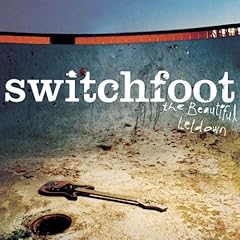
Switchfoot - "The Beautiful Letdown"

Year: 2003
Label: Columbia / Red Ink
Favorite songs:
Meant to Live, Ammunition, Dare You To Move, This Is Your Life, Redemption, Gone
Lyric sample: "Gone like Frank Sinatra / Like Elvis and his mom / Like Al Pacino's cash / Nothing lasts in this life / My highschool dreams are gone / My childhood sweets are gone / Life is a day that doesn't last for long"

Whenever your favorite band releases a new record, it's always an event. It's like going to a carnival, only instead of funnel cakes, grease and body odor, it smells that crisp, slightly musty new CD smell. And instead of spinning around in circles until you hurl, the compact disc does all the spinning for you (unless you happen to have a swivel chair and enjoy abusing it) and you just kick back and take in some new tunes. Switchfoot's fourth studio record was an event. It was their first on a major mainstream label, so fans got to hear how they might sound with an additional band member and a lot of digital polishing. The truth is I've always thought of Switchfoot as a fairly earthy garage-ish group with a good bit of raw energy, so while Letdown is anything but hard to listen to, it doesn't do rock enthusiasts any favors by taking the edge off. In fact that could have easily been the end of their appeal - but fortunately Switchfoot has always been a poppy band with ample time spent in quiet reflection through their popular ballads, so the sense of atmosphere here allows those moments to thicken. Even more fortunately, they are still writing great songs, and it's hard to kill a great song. If you're interested in killing great songs, watch "Across the Universe" and you'll find plenty of examples. However, this isn't about that.

Speaking of the atmosphere, the whole record is drenched in it. The addition of keyboardist Jerome Fontamillis to the SF lineup (he had previously been seen playing live with them) provided them more opportunities for noise - beeps and bloops, swirls and swells, the kind of thing that seems to help add sonic depth to existing song structures. Jon Foreman's versatile and recognizable vocal has never sounded better, clearer, or stronger. He starts off in "Meant to Live" making some aggressive expressions we've never heard from him before, assimilating them effortlessly into his sound. With this new-found confidence, he goes on to add some similar punctuation to their re-recording of "Dare You To Move" from Learning to Breathe. Understanding that they were reaching a lot of new listeners with their expanded influence, they wanted to make sure one of their best songs received airplay - understandable. I think some of the new embellishments actually helped the song, though it's difficult to change something so well-loved without messing some things up as well. I'm also not sure that having it appear at number 5 on the disc works the way it should.

What does work is the bombastic opener, "Meant to Live." Easily the heaviest Switchfoot song up to that point, "Meant to Live" is a rollicking, soaring radio rocker with plenty of distorted electric guitar. The main riff has probably at some point been stuck in the heads of everyone who has heard it. I know a lot of people must be tired of it by now - that's one of the drawbacks of receiving a lot of radio play - but not me. I still love the song every time I hear it. Lyrically it brings the theme of the album into focus. Nearly every song in some way will touch on the ideas of dissatisfaction with life, the pitfalls and transience of the culture, and the search for something greater, for purpose and meaning. The band continues to rock with "Ammunition," an explosive expose' on our self-destructive nature. Chad's Butler's drumming takes center stage during the intro, featuring some odd timing that seems disorienting until it slowly builds into a discernible pattern.

I never feel like Switchfoot is doing something just to do it. They are not overindulgent and their work is always heartfelt. In some ways they resemble U2 in their ability to take simple progressions and make something special out of them. "On Fire" is perhaps the song most reminiscent of their classic ballads. It's a fantastic slow and tender moment, maybe the quietest point on the album. Between this extreme and the opposing rock tracks exists every shade of intensity. "This is Your Life" and "More Than Fine" bubble along at an even pace, both demonstrating the band's ability to add interest where lesser groups would probably deliver un-memorable stock songs. "More Than Fine" has an unpredictable verse melody that catches your attention immediately, and "This Is Your Life's" oddly haunting synths embody the space between fear and regret. Then there are the songs with a more robust pace. "Redemption" may be the oddball on the record with nothing else that really corresponds to it in terms of sound. It uses clear, clean instrumentation but keeps a brisk gait and boasts one of the better choruses on the album. "Adding to the Noise" and "Gone" are the bouncy, fun songs similar in style to something like "Company Car" from the New Way to Be Human record. "Gone" is perhaps most notable for its lyrics rather than its radio-groomed groove, an upbeat reminder that our life, like today, is fleeting and our earthly wealth has no lasting importance.

Perhaps the heart of the record, appropriately, is the title track. "The Beautiful Letdown" is the first song I heard from this record, played live by the band before its release. It it is a simple song full of jangly instrumentation that speaks of being a sojourner in a land unfit. The hopscotch lyrical meter sometimes feels like it's running to catch up, emphasizing the feeling of being out of place. The term "Beautiful Letdown" is a classic Jon Foreman expression. Switchfoot has made a habit of exploring the paradoxes of faith, and this is another approach at that theme.

As Christians we may not belong to this world, but this album belongs in your collection - and up high on my list. The main video for Meant to Live is pretty cool, but you've all seen it and the sync for most of them is off. I think this is cooler with the concert footage. Check it out.

And - stay tuned for the final 10!

Saturday, June 14, 2008

My Top 40 Albums - #12

#12
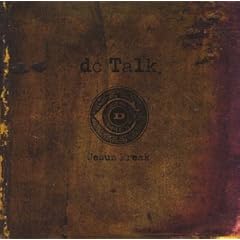
dc Talk - "Jesus Freak"

Year: 1995
Label: Forefront
Favorite songs:
So Help Me God, Mind's Eye, Day By Day, Colored People, Jesus Freak, Like It Love It Need It
Lyric sample: "Saw a man in the desert with naps on his head /  The sand that he walked was also his bed / The words that he spoke made the people assume / There wasn't too much left in the upper room / With skins on his back and hair on his face / They thought he was crazed by the locusts he ate / The Pharisees tripped when they heard him speak / 'Til the king took the head of this Jesus Freak"

If this were a list of the most famous, lucrative, or influential Christian rock records, you'd see this one in the top 10. There simply isn't any question that Jesus Freak has embedded itself in firmly in the Christian youth culture whose battle cry its anthems have become. The title track itself has been covered by local bands nearly as much as all of Relient K's catalog combined, which is saying something. I imagine that many people have heard dc Talk's breakout smash hit so many times that its passages have become simple buzzwords more than a musical experience. For me, these tunes are familiar like my church sanctuary or the back seat of the family minivan. They've been with me since early adolescence. Familiarity can breed contempt, or at very least boredom and shelf-setting. What I think many former youth-group kids may fail to recognize is how good the record really is. Like the fragrance of your own home, it's something you aren't always aware of until you've been away from it for a while and are able to take it in anew. Not simply a shoe-in based on its pedigree, an examination of Jesus Freak reveals to me that it has earned its keep.

One of the things I find most astonishing about this album is that it actually only contains about 8 original songs.
"Day By Day" is a cover, and "In the Light" is a reworked Charlie Peacock tune. "Mrs. Morgan" surely doesn't count as an actual song, nor does the silly "Jesus Freak Reprise." I suppose you could count the hidden poem "Alas My Love," bringing us to 9. With dc Talk it is apparently quality over quantity, and it seems that each song is almost something larger than life. It has to be in order for the album to be so cohesive and full.

So what makes Jesus Freak so great? For one thing, it represents a giant leap forward in the development of dc Talk. Their previous release, Free At Last was still primarily a hip-hop record, even though it began to add more rock guitar riffs on songs like "Luv is a Verb." With Jesus Freak, the influences of the early '90's grunge movement are evident. The packaging has taken on the dirty, urban monochrome preferred by rock groups of the time rather than the more expressive colorful displays that often accompany rap projects, signaling a change of form. Indeed, Toby MacKeehan's rapping takes a more minor role while the hooks and guitars become more prominent. The tendency would have been to follow a trend, losing the original appeal of their work and drawing the ire of fans and critics alike with an inferior imitation of a popular sound. That Jesus Freak subverts this gaping trap is a testimony to its success.

dc Talk is one of those rare groups who can simply not be categorized. They almost entirely defy genre grouping, and this landmark album shows their sound at its most diverse. Rock, pop, alternative, grunge, rap, funk.. it's all here in some form. Combining the influences of Toby, Michael and Kevin has always been a strong point for the group. Surprising due to its diminished rap focus is that Toby co-wrote most of the songs on the record. These songs are fantastic in their musical deftness. Melodic, moving, well-paced and well-sequenced, the song chain on Jesus Freak doesn't harbor any weak links. There is no evidence of rushing or filler material. Each and every measure has been carefully, lovingly crafted and tweaked. It absolutely reeks of quality, in some ways an ethereal quality that I can't quite explain. Consider the blistering rap breakdown in "Like It, Love It, Need It," the infectious pre-chorus of "So Help Me God," the dense tapestry of acoustic instruments and harmonies on "Between You and Me." These songs have special moments that invite revisiting. It's raw enough not to sound totally overproduced, but it's clear a lot of work has gone into the making.

The remarkable perfection of these original recordings is accented by recent projects such as Freaked!, a compilation featuring covers of every song on the Jesus Freak record by various Gotee and Mono Vs. Stereo recording artists. Several of them are quite likable, but they can't seem to reach the balance and depth of the originals; what's more, the songs that I enjoy the most are almost always the ones that have changed the least. Of course it isn't really sporting for these young bands to have to compete with the vocal powerhouses of Michael Tait and Kevin Max. Both of these men have stunning vocal range and expression, and their styles mesh extremely well together. The other thing that these homages demonstrate is the resilience of these same songs. They are so well-written that inasumch as their primary melodies and structures remain intact, they pretty much always sound good.

The only song on the album that I just plain don't like is "What If I Stumble." I have never much cared for the song, and I think it has to do with the instrumentation as well as the mostly low-key presentation. Add to this that it's too overplayed on Christian radio stations (along with "In the Light," a great song that I can hardly listen to anymore due to overexposure) and it becomes a section of the disc that I'm prone to skip. I thought perhaps it would be better without the French-sounding instruments, but a brief listen to Sarah Kelly's cover sent me running back to the dc Talk version in a hurry. I do appreciate the humility that the song offers.

Jesus Freak is so well known and liked that it doesn't need me to bat on its behalf.  I consider it dc Talk's question album. Listen to all the questions in the lyrics. "What will people think? What will people do?" "What if I stumble? What if I fall?" "What have we become?" Supernatural in some ways has more answers, as well as completing the transition from rap to alternative rock. I consider both records absolute necessities, dc Talk's zenith before they dropped sharply into murky limbo. Will they ever return? Who knows. In the mean time I can still savor this classic, as well as Kevin Max's occasional release.

dc Talk was always up for combating racism, and Colored People made the message loud and clear. This video captures the feel of the album in my opinion. Good memories.

My Top 40 Albums - #13

#13
Five Iron Frenzy - "Our Newest Album Ever"

Year: 1997
Label: 5 Minute Walk
Favorite songs:
Every New Day, Handbook for the Sellout, Fistful of Sand, Most Likely to Succeed, Oh Canada, Superpowers
Lyric sample: "Under the sands of the mighty Sahara goes / Our hero bold in search of gold / A casket for a dying world / Our hero stands, wealth in hand / The prize for his endeavor / The masses cheer to hide their fear / That no man lives forever"

Ah, Five Iron Frenzy. I suspect that there are those out there who think that the gang from Colorado is just a bunch of silly goons without any real talent or foundation. After all, they present a rather playful image of themselves as ska bands are known to do. It took me a while to begin seeing the value in them myself. One of the first Five Iron songs I ever heard was "Where is Micah" from this record, playing on the radio station that my friend's church used to operate. It was an odd song, and I wasn't sure about the quality or purpose of the whole thing. It didn't exactly convert me into a die-hard fan of the group. It took me being reintroduced to them during the Boogaloo era and then getting into their older songs through the live album Proof That the Youth are Revolting before I was ready to come back and give Our Newest Album Ever, the newest no longer, a second sporting chance. Indeed, the live record sums up much of the best of Five Iron's early career, and the amount of material that comes from this record is telling. Our Newest Album Ever's track list reads like a catalogue of the band's greatest hits. It's easily the strongest outing from the first (more ska) half of their run, and gives all the other records some solid competition as well.

Yet what surprised me most was that the actual product is not simply a collection of songs from an unusual bunch of punks and band geeks finding their place. It's actually a cohesive, moving piece of work, the trademark humor serving as a jarring contrast to the profound themes that it also confronts. The record is almost split half and half between silliness and poignancy, and that split sometimes occurs down the middle of songs.

It takes eight people to comprise the wondrous wonders of Five Iron Frenzy, but let's take a moment to look at the ones that stand out the most. The voice of the band, one Mr. Michael Reese Roper, does much to distinguish Five Iron Frenzy from a host of cheap imitators. His vocal delivery here is much improved from the first record. It sounds much smoother and meshes nicely with the sound that the band is establishing. His greatest addition, though, is surely his lyrics. Playful, sarcastic, poetic, blunt, angry, worshipful... it's a staggering mix that delivers many moments of poignancy throughout the album. Matched with perfect musical touches thanks to a melodic writing team including trombonist Dennis Culp and then-guitarist Scott Kerr, Roper's lyrics pierce to the heart of various issues in ways that I can't really describe. I don't know if anyone feels the way I do about this record. It kind of makes me feel at a loss to explain myself. It's a lot of fun. It's a peppy, energetic sing a long. But as I'm bobbing my head, I end up feeling deep emotions.

"Handbook for the Sellout," one of the band's best and most famous songs, starts out the record. It's a rousing opening, giving you Five Iron's trademark sound. Two overdriven (but not grungy) guitars panned left and right playing harmonizing power chords, a brass section peppering melodies on top, punk-ish drums and bright chords on the upbeat during the verses. Palm-muting in the bridge, a swelling prechorus and a very catchy four-line, four-chord chorus. The enduring song is about the politics of record labels and band popularity, pointing fingers at the ridiculous game that goes on in the industry and governs popularity, what you can and cannot sing about, and whether a band is perceived as original or as sellouts. "Where is Micah" is an in-joke about the band's guitar player Micah Ortega disappearing and being left behind at shows. Then comes "Superowers," a zany depiction of the band themselves as having powers gained from smelly bus rides and no practice. "Five minutes left to write this one / la, la la, la la, la la la."

Then comes one of my favorite songs in the FIF canon, "Fistful of Sand." This darker turn about the worthlessness of worldly treasures in the face of man's mortality marks the first of several sublime passages on the record. There's something in the lines "Where cities stood, soon deserts found / Now sink beneath the swelling ground" and "The masses cheer to hide their fear / That no man lives forever" that gives pause. Even as these lines lead us, toe-tapping, from the verse into the chorus, they hit on very real anxieties that have plagued not just individuals but entire empires since the earliest times. A similar instance appears near the end of the album in the song "Most Likely To Succeed." "And as you go / Call to mind the things you've come to know / Be sure to wave goodbye / On the day you die / To all that you wanted / You're leaving behind." It's chilling words for those whose last hope is in their accomplishments on earth.

In the meantime, Five Iron writes about lost family heirlooms ("Blue Comb '78"), the treatment of Native Americans ("Banner Year"), the treatment of nerds in grade school ("Suckerpunch") and, of course, Canadians ("Oh, Canada"). Then, at the end of it all, comes perhaps the band's best song, the one both they and their fans seem to esteem above the others. That song is "Every New Day." One of the all-time great ending songs, "Every New Day" is a catchy little praise song in its first half - but then the bridge kicks in and Reese begins speaking his lines, slowly raising his voice until he nearly shouts (on the live album, he screams the last part). The finale is beautiful, affirming, and transcendent. It gives me chills just about every time I hear it. It's a perfect finish to an amazing record. This album has to be heard to be believed, though I'm not sure what it takes to be understood. Maybe just a willing heart.

My newest link ever! Dance on over to this rad video for Handbook for the Sellout with some classic FIF concert footage. Oh, and the scenes at the beginning and end are from the movie King Kong vs. Godzilla.

My Top 40 Albums - #14

#14
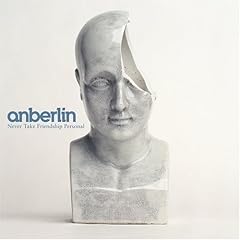
Anberlin - "Never Take Friendship Personal"

Year: 2005
Label: Tooth & Nail
Favorite songs:
The Feel Good Drag; Stationary, Stationery; Paperthin Hymn; The Runaways; Aubrey, Start the Revolution, Dance, Dance, Christa Paffgen
Lyric sample: "Remind your parents we're tomorrow / Lead with morals and we'll follow / When they wake up they'll see / That youth fades and glory days deceive / What are you waiting for, let's move on this / Time is of essence like your kiss / So say you're in / With cards down and guns drawn this is it // If this isn't love / This is the closest I've ever been"

Anberlin is one of my favorite bands, so it seems only fitting that one of their records should get near the top. Originally this was a placeholder in my top 10 but I simply couldn't justify leaving it there. They are in my top 10 bands but no single record of theirs is really that calibre. In fact, they are all very much alike with a few alterations. Most great bands pioneer their own sound, a savvy synthesis of their influences. That's what makes them notable, makes them last. Others define their genres so completely that they become inextricable from them. Anberlin is a genre band. They have a certain sound that they pretty much keep to, but no one else can do that sound the way they can. And I happen to really like that sound, so color me a fan.

As far as choosing a defining record, Cities is really growing on me as their mature effort, and Blueprints has the wonderful "Readyfuels." Straddled in between is the boisterous sophomore effort, the awkwardly titled Never Take Friendship Personal. The name of the game here is catchy pop-punk tunes. That's really it. If you liked the Anberlin from their first record, this is mostly more of the same - it's just more infectious, upbeat and a bit more varied. It it maybe has a bit more midrange, which I like because it brings out the guitars. The winning ingredients - a distinctive male vocal with impossible range; an energetic, driving brand of emo-flavored rock; a sharp, cynical attitude that coats the lyrics and melodies in a danceable melancholy. There are some exultant tunes that glory in close friendship, like "Time and Confusion" and "Aubrey, Start the Revolution." There are some really dark, angry songs like "Never Take Friendship Personal" and "The Feel Good Drag." There are the radio-ready riffsters "Paperthin Hymn" and "The Runaways;" the pop pieces "Stationary, Stationery," and "A Day Late;" and the long progressive closer "Dance, Dance, Christa Paffgen." Then there's the soft song, "Symphony of Blase" that no one really cares about, and the sarcastically named instrumental "A Heavy Hearted Work of Staggering Genius."

Anberlin excels at big hooks that get you singing along, and so the songs that amplify this trait tend to be the strongest. One of the better moments is the decidedly dark "The Feel Good Drag." Like "Readyfuels" on the previous album, the lead guitarist gets one song to show off his chops, and this is the one. His solos are always fitting, tasteful and fun. Add to that some nice root movement during the bridge and a strong hook and you have yourself a hot rock single. "Paperthin Hymn" and "Runaways" play with some elements previously untapped. The former is a more reserved sounding track with a prominent riff and poetic lyrics, and the latter features some nice guitar work and even a bass solo. Maybe the biggest departure from the established norm is the final track, a 7 minute undertaking that would become the model for the likes of "*Fin" on Cities. There are not that many songs this long that I can enjoy listening to all the way through. "Dance, Dance, Christa Paffgen" admirably keeps my attention. It displays a well-defined sense of atmosphere and one of catchiest choruses on the record.

Shortly after Never Take Friendship Personal was released, I had ripped it from my brother and listened to it quite a few times on my MP3 player. Later on, I went to Family Christian Stores to look for some new music. I looked through quite a few options that I had hoped to get, but ended up buying my own copy of this album. It was just that much better than anything else I was contemplating. I felt no regrets about that decision, and it hasn't much worn out its welcome. In the case of this review, you should take it personal. My bias towards this album is not very objective. In fact, I readily acknowledge that by critical standards it's not nearly as good as many records that it sits above in placement. However, this is my list; and the style is one I wish I could find more of. Plus several songs on the record came at a good time in my life to kind of bring out my thoughts and feelings better than I myself could. These have become entwined with certain relationships such that corresponding emotions often arise with their playing. If I have a complaint, it's that it's too short. I play these CD's for myself as I'm writing the reviews, and it's rare that one ends before I'm through typing. This one just finished, so I'll stop too.

"Don't need no drugs / You're my chemical / Now I'm dependent / Swear I'm clinical."  Get your Anberlin fix with this video for "Paperthin Hymn."