skip to main |
skip to sidebar
#1
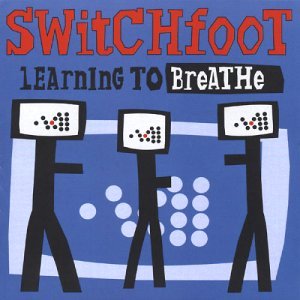
Switchfoot - "Learning to Breathe"
Year: 2000
Label: Re:Think
Favorite songs: I Dare You To Move, Learning to Breathe, Playing for Keeps, Love is the Movement, Poparazzi
Lyric sample: "Only the losers win / They've got nothing to prove / They'll leave the world with nothing to lose / You can laugh at the weirdos now / Wait 'til wrongs are right / They'll be the ones with nothing to hide / Cause I've been thinking, thinking / I've got a plan to lose it all"It's always difficult to write about what you consider to be great, because you want what you write about it to also be great. You want it to capture the essence of what makes it meaningful to you and inspire others to see your point of view. The fear of not doing justice can be paralyzing, and can make you second-guess yourself to the point where you either can't write well or don't write at all. Saving the best for last sometimes means that there's not as much energy and zest left for it. I hope that will not be the case here. I want to complete this list and move on to other things, and since I've already written a review of this record, I'm tempted to simply post that and let things be. However, I feel I owe you, my readers, more than that - I owe it myself and to my love for this record. So I'm going to try not to second-guess, and let my ideas and feelings regarding Switchfoot's third album flow as readily as I am able.
If you're a younger person or relatively new to Christian music, you might not be familiar with the first half of Switchfoot's career - although with the convenient early years pack that was released, you don't have much excuse. It was after the release of Learning to Breathe that the band's music appeared on the soundtrack for A Walk to Remember, and the rise to stardom began. That's also when they started adding more band members and gained the financial ability to overproduce their records. Learning to Breathe is the height of the the indie era, the three-piece phase, whatever you want to call it. Other than the first album, this one sounds probably the most organic. It's a smart rock record with a lot of restraint. You won't hear the distortion being pushed to the max here for cheap power - only on "You Already Take Me There" do we feel the fuzz. Most of the sounds that Jon Foreman lays down are bright acoustics and jangly electrics with light overdrive designed to intermingle with the bass. The interplay between all three band members has never been better, and no song would sound remotely like itself missing one of them. Sometimes it's hard to tell which instrument - bass or guitar - has the melody, so inextricable are the parts. The intros to "Love is the Movement" and "Learning to Breathe" typify the kind subtle writing and sound mixing at work. That delicate balance is one of the things I loved so much about old-school Switchfoot, and it helps set this album apart.
For those who have been oversaturated with "Dare You To Move" on the pop stations in recent years, it might be hard to imagine how fresh the song was on its first release (incidentally, it was originally called "I Dare You To Move"). When I put in the CD, I was expecting some kind of funky riff like on "Bomb" or a bouncy rocker like "New Way to Be Human." What I heard instead was a methodical, swelling buildup to what is essentially an alternative power ballad that leads into the acoustic title track. It sets the tone for the album as being one of introspection, not showmanship.
"I Dare You To Move" begins unceremoniously enough, but with an air of expectation as Jon sings "Welcome to the planet." The clean guitar rings out in constant rhythm, becoming an undercurrent that runs through the song. The band takes time to let it play, to linger on the harmonics and the little keyboard chimes before the second verse. The chorus is pretty and straightforward, Jon's distinctive vocals easily floating into the high notes. When the second verse begins, everything changes. "Welcome to the fallout," he sings with a bit of edge on the end of the last syllable. The rhythm section kicks in along with the distorted guitar for a burst of sound followed by the relative quiet of that clean undercurrent, still steady beneath it all. Long before we hear the lyrics "The tension is here," we know the tension because it's being displayed for us in the dynamic wrestling, as if the song can't decide how it wants to sound. The second chorus is of course louder and more emphatic than the first, and the bridge goes from conflict, to question, to surrender all in a few brief bars, culminating in the falsetto line "Salvation is here." The instruments come crashing back for that final chorus, that crystal clear impassioned plea, which then dissolves into noise before settling into the more calming beginnings of "Learning to Breathe." Its brilliance is in the effective use of simple elements. Many of the other songs on the album are more complex, but few are as powerful.
Another standout is "Love is the Movement," the battle cry of the album. This song has it all - an anthemic chorus, a great classic Foreman metaphor (and a double meaning for the word "movement"), a wailing soulful ensemble, and an epic exultation (going up the octave on "This is a revolution"). The brittle sounds of the verses accent the lyrics about waiting for motion. I can't really begin to explain this song, which is part of what makes it so memorable. All of the things I say about make it sound cliche, when it's anything but. It's one of the best in Switchfoot's catalogue.
"Poparazzi" gets down and grungy with an unkept garage rock sound in a boisterous track about the meaningless pop songs that get stuck in our heads. This is the father of songs like "Gone" that have so much fun with the subject matter. "Innocence Again" flirts with reggae influences. "Playing for Keeps" poignantly captures the funk and confusion that comes with having to let go of a relationship. I've always loved this song because it has a lot of energy, but it's still profoundly forlorn. This song sounds like resignation feels. It's creepy good. Then there's "The Loser." It's an anthem for all losers, and of course it takes on the Scriptural paradox that we lose our lives in order to save them. Switchfoot has long been interested in such paradoxes. "Living is Simple" audaciously asserts that living is simple because losing is easy - it's just dying. Anyone can do it. "Is this fiction / Or divine comedy / When the last of the last finish first." "Erosion" continues the pondering with yet another destructive metaphor. Erosion be seen as something that eats away at you, but Foreman prefers to equate it with the cleansing force of the Spirit, washing away our impurities.
I feel like in many ways Learning to Breathe is Switchfoot's most mature work. It has at least as much lyrical efficacy as anything they've ever done, with more obviously applicable spiritual themes than some of the latter records. It has the transparency of Legend of Chin, the experimental energy of New Way To Be Human, and the cohesion and atmosphere of The Beautiful Letdown (maybe the most similar record to this) but without all the bombast and fluffy production. It's a track list filled with great songs, played with conviction and honesty, stripped down to their vital elements with nothing added and nothing missing. This was the album that convinced me Switchfoot was going places. I liked New Way to Be Human, but when I heard Learning to Breathe I was transfixed. And I still get that way after 8 years, which is why this has remained my favorite record.
Take an introductory breathing course with this video for You Already Take Me There.
#2
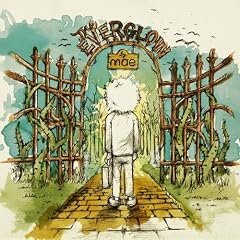
Mae - "The Everglow"
Year: 2005
Label: Tooth & Nail
Favorite songs: The Everglow, Cover Me, Suspension, We're So Far Away/Someone Else's Arms, Painless, The Sun and the Moon...
Lyric sample: "Painted skies / I've seen so many that cannot compare (to) / Your ocean eyes / The pictures you took that cover your room / And it was just like the sun but more like the moon / A light that can reach it all / So now I'm branded for taking the fall"
The Everglow isn't something you listen to - it's something you experience.
Mae's astounding sophomore record is a delight, a sweeping pop rock epic packed with energy and pathos. The breakout indie rock outfit from Norfolk, VA, have cleverly infused the sounds on the compact disc with the liner notes to take the listener on a storybook journey. As you read the lyrics and listen to the music, you can follow along in the water colored mini-book whose simple but vibrant images place the various tracks in the context of a whimsical fantasy, a concept which reinforces the already superb song sequence. The order is perfect, and thanks to the sounds that neatly connect the songs to one another (as well as signal the listener to turn the page in the insert), this is the most cohesive concept album I've heard in years.
With Destination:Beautiful, Mae showed they were competent musicians who could write catchy indie/emo tunes. The Everglow ratchets up the sonic qualities and blows the first album completely out of the water. It's louder and bolder but also more tender. Mae's distorted guitars have a soft edge, and the ever-present keys are effective at sustaining the mood - accenting the rock sounds and soaking the ballads. Dave Elkins' soothing vocals easily ride the waves created by the rest of the band, and he is a comforting guide.
After the brief introduction, The Everglow opens with "We're So Far Away," a gorgeous piano piece that begins the journey with reflection and longing. It segues with great satisfaction into "Someone Else's Arms," the loudest and most straightforward rock tune that Mae fans have heard up to this point. The juxtaposition of those two songs is a most welcome surprise that fills us with exciting expectations that our journey will be dynamic and unpredictable. Most of the record is not so notable as this initial pairing, but it is filled with little sublime moments. The peppy "Suspension" and transitional "This Is the Countdown" are more subtle, feeding thought-provoking lyrical snippets at measured intervals between singable choruses and driving bridges.
The lyrics on this album are not, for the most part, terribly original or evocative. It's kind of a shame because with some sharper writing the effect might have been a truly transcendent. Also, while I hate to ever complain about being given more for my money, The Everglow could probably function as well with fewer tracks. "Breakdown," and especially "Mistakes We Knew We Were Making" feel a little like filler material. However, a great director, cinematographer and actors can sometimes create a masterpiece even with a flawed script; and with The Everglow it's all about the presentation. We've heard these emotions and ideas before, but never in this way. The unparalleled craft elevates and insulates the weaknesses so that you don't even notice them except upon some reflection. This is a record full of great moments that also amounts to a whole greater than the parts, which is a pretty impressive achievement.
Consider the underrated "Cover Me." The bridge in this song is wonderful. After a typical soaring exclamation ("Figure this out and to be free tonight") the song collapses down to a single palm-muted guitar riff backed by a tentative piano. The note choices are exquisite. Every one has value, none are wasted. I sucks you in, breathless, listening for what they will do next. As the instruments join and the intensity builds back up again, the same riff is given layers with more complimentary notes in what becomes one of the best songs on the record. You have to hear it to appreciate it. This is followed by the title track, the triumphant climax of our spiritual journey. The keys sparkle over the song like a clear canopy of twinkling stars and you can feel the rapturous satisfaction of decision and victory and rest. Tracks 12-14 are more of the declining action, culminating in "The Sun and The Moon," a devastating swell of sadness and beauty. The repeating progression in the extended outro is genius - so simple yet so entrancing. Taking advantage of the circle of relationships between chords in a key, it leads us around and around in inescapable, dreamlike maelstrom. It seems appropriate that song evokes sea-like imagery. You could say that "The Sun and the Moon" is a sister song to "The Ocean," the other true ballad that sits in the middle of the record. It's a fitting denouement to a bittersweet experience.
If you haven't heard this album, there's no time like the present. If you have, it's easy to tell, because you're shaking your head wondering why this isn't number 1. ;) Relive the magic with this video of Suspension.
#3
Five Iron Frenzy - "Five Iron Frenzy 2: Electric Boogaloo"

Year: 2001
Label: Five Minute Walk
Favorite songs: Far Far Away, You Can't Handle This, Farsighted, Car, Blue Mix, Plan B
Lyric sample: "And Leonard Nemoy / Can't stand up to this / And Captain James T. Kirk / Bows beneath my fists / And I am awesome / Awesome / I am the awesomest"
If you look closely, the clues are there. Eight people: not too many bands have eight people. And what's with that title? Electric Boogaloo? Sounds downright silly, and it actually has nothing whatsoever to do with record's theme or content. It's a reference to the movie Breakin' 2: Electric Boogaloo. Oh, and this isn't the band's second album. It's their 6th. So the evidence is here. But there's not much else that alerts us that this is a Five Iron Frenzy record. Where are the flashy colors? The stylized drawings of robots and creatures? As it turns out, Electric Boogaloo is not your older brother's Five Iron. It takes quite a different approach from the experiment that was All The Hype Money Can Buy. With this new album, Reese Roper and the gang have reinvented themselves, riding their third-wave ska onto the beach of modern rock. And the surprising thing? They're all the better for it. Long-time fans may have difficulty accepting the lack of upbeats and quirky horns; but if they can get past their initial expectations, they may find that Five Iron Frenzy has released the finest recording of their career.
This is a darker, more serious FIF, but that in no way makes it boring or uninteresting. Quite the opposite - the songs on Boogaloo are fast-paced and riveting. The guitars rock harder, the drums pound louder, and perhaps most noticeable of all, Reese sings better than ever before or since. Lead vocalist Roper has never sounded better than he does here - we catch him at what is arguably the apex of his career. It's almost hard to believe this is the same mumbling, thin-sounding man from 1996. Here he exhibits a great power and confidence - his highs are startling but they don't waver. His unique presence is compulsively listenable. It fills out the record and drives it forward. Listen to those high notes on "Farsighted," and the shouts and screams on "The Day We Killed" and "Vultures." His lyrics are still solid as well, they just aren't as funny. That is not to say the record is without its humor, of course. "Pre-Ex-Girlfriend," "You Can't Handle This," and "Plan B" and "Vultures" all have their share of silliness. However, standouts like "Spartan" and "Far Far Away" carry a solemn respect for their subject matters. The only place that their earnestness goes a little bit overboard is on "The Day We Killed" - it's just too theatrical. However, when a song like that is the worst one on your album, it says a lot for the other tracks. And here they are all fantastic. Writing and technical credits are strong across the board. This is the most polished FIF record. Finally the level of production is matching the strength of their songwriting which is as catchy as ever.
Once again I will alternately caution and encourage readers: this is not a ska record. Even less so than The End is Near. It is modern rock with horns. The only song that really contains any discernable ska element is "Plan B," which, like the rest of the record, sounds stronger and more refined than similar tracks on previous outings. By industry standards, Boogaloo's quality stands out from the crowd of mediocre rock albums. Take a close listen to the underrated "Car." How many contemporary Christian music acts have you ever heard perform a song in 5/4 time? I can count them on one hand. Once you realize what they are doing, you gain a whole new respect for the song. Just try and figure out where all the hits are going to land and I imagine you'll be left scratching your head at least once. But here's the kicker - it's not just an experiment, it's a genuinely good song with a singable chorus and some emotional lyrics from Jeff "The Girl" Ortega.
With so many memorable songs that run the gamut of FIF's usual subjects - the infectious, satirical "Vultures" takes on consumerism and corporate greed; "The Day We Killed" angrily laments the mistreatment of native Americans; "Blue Mix" exposes the industry with ferocious style - I have to say a word about "Far Far Away." It is one of the first Five Iron songs I remember hearing, and after listening to their entire catalogue it remains one of their very best. The loaded verses swell into an irresistible chorus in a song that should have soared on radio waves for months. "Far Far Away" has the poignancy of old favorites like "Every New Day" in a brisk, savvy, 3 1/2 minute rock song. It sits near the helm of the record but it could easily be a closer to cap off the journey (though "Eulogy" fills that need in bittersweet beauty).
Five Iron Frenzy may not be known for their maturity, but Boogaloo is a class act - a cohesive, top notch album with a big sound a great songs from beginning to end. As my favorite CD from one of my all-time favorite bands, Electric Boogaloo is a shoe-in for spot number 3.
None of these songs have official videos that I am aware of, so just listen to Far, Far Away. It's the awesomest.
